
5 Science-Backed Ways to Transform Your Home into a Mental Health Sanctuary
In today’s fast-paced world, our brains are constantly bombarded with stimuli. From endless screen notifications to professional pressures, our nervous systems rarely get a chance to fully reset. While we often look to text-book self-care routines like meditation or exercise to decompress, we tend to overlook the most significant factor influencing our daily mood: our homes.
As an interior designer specialized in Applied Neuroscience to Architecture, I study how spatial design directly impacts our brain chemistry, cortisol levels, and emotional balance. Your home shouldn't just be a aesthetic backdrop; it should actively function as a tool for neuro-regeneration.
Whether you are dealing with high-stress corporate environments or bracing yourself for the long Canadian winters, here are 5 science-backed ways to redesign your space for optimal mental health and well-being.
1. Optimize Your Light for the Circadian Rhythm
Your brain relies heavily on environmental cues to regulate sleep, energy, and mood. Exposure to harsh, blue overhead lighting in the evening suppresses the production of melatonin (the sleep hormone) and keeps your body in a state of high alert, mimicking midday sun.
The Science: Studies in neuroarchitecture show that matching your indoor lighting to the natural 24-hour cycle of the sun—the Circadian Rhythm—dramatically lowers anxiety and improves sleep quality.
How to apply it: During the day, maximize natural daylight. In the evening, turn off bright ceiling lights and switch to warm, eye-level lamps (around 2700K) to signal your brain that it is time to wind down and lower cortisol production.
2. Introduce "Biophilic Design" to Lower Brain Stress
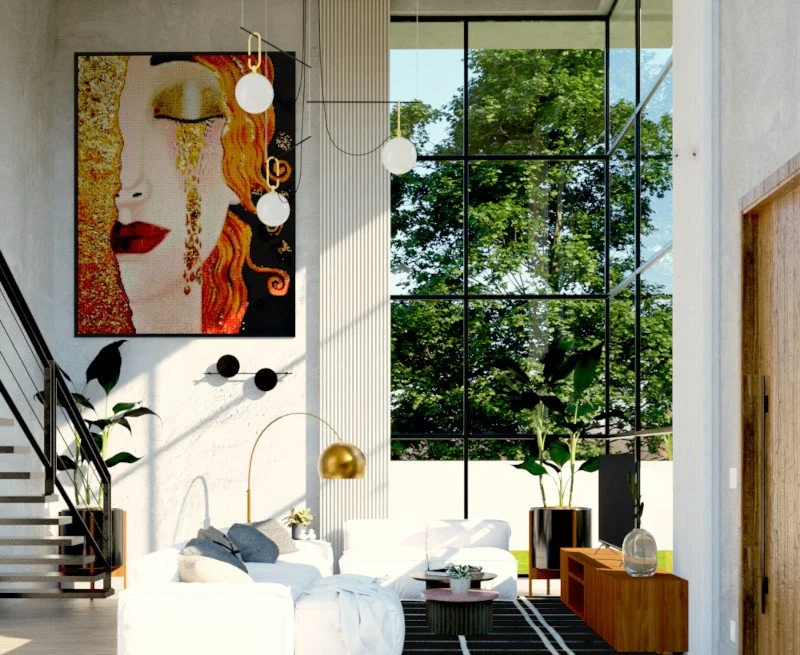
Humans possess an innate, evolutionary connection to the natural world, a concept known as Biophilia. When we are completely cut off from nature—living inside generic, sterile gray or white boxes—our brains register a subtle, constant state of environmental stress.
The Science: Looking at natural elements, such as wood grains, stone textures, or indoor plants, triggers an immediate reduction in blood pressure and heart rate, while stimulating the release of dopamine.
How to apply it: Embrace the essence of Brasil Core by introducing rich, warm native woods, organic linen fabrics, and large-leaf indoor plants like Monstera or Fiddle Leaf Figs. Bringing the natural world indoors keeps your brain connected to life, vitality, and growth.
3. Leverage the Psychology of Curves and Organic Lines
Look around your current space. Are most of your furniture pieces sharp, angular, and rectangular? If so, your environment might be triggering a subtle defense mechanism in your subconscious mind.
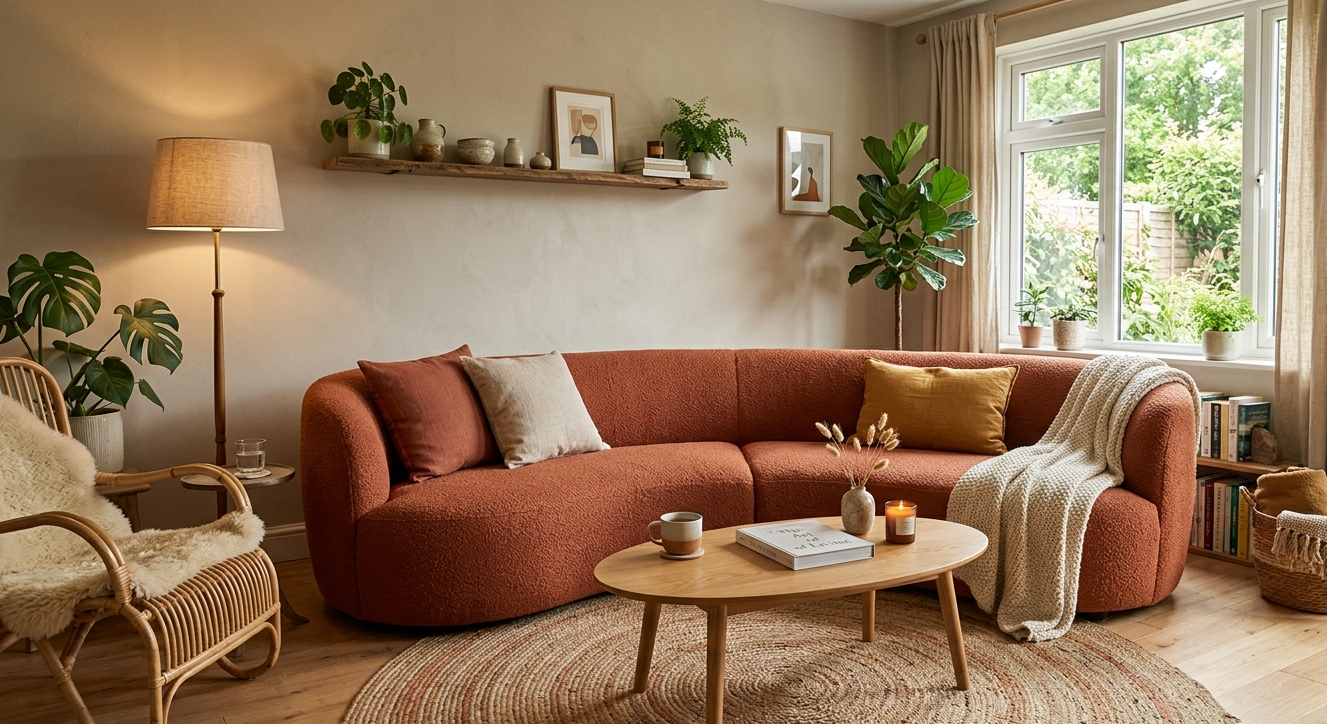
The Science: Neuroimaging studies reveal that looking at sharp angles activates the amygdala—the part of the brain associated with fear and threat detection. Conversely, organic, curved shapes activate the orbital frontal cortex, signaling safety, comfort, and emotional ease.
How to apply it: Integrate fluid lines into your home layout. Choose a curved sofa, an oval coffee table, or arched decorative mirrors. This flow creates a visual "softness" that coaxes your brain into an immediate state of relaxation.
4. Reduce Visual Noise to Prevent Cognitive Fatigue
Every single object in your field of vision requires your brain to process information. Clutter, disorganized spaces, and overly chaotic decor patterns force the prefrontal cortex to work overtime to filter out distractions, leading to mental exhaustion and irritability.
The Science: A clean, visually balanced space minimizes cognitive load, allowing your brain’s default mode network (DMN) to activate, which is essential for creative thinking, processing memories, and deep mental rest.
How to apply it: Prioritize smart, hidden storage solutions. Keep your surfaces clear of unnecessary items, and curate your decor carefully. Instead of displaying twenty small items, choose one or two high-quality, meaningful statement pieces that bring you genuine joy.
5. Stimulate the Neurobiology of Touch
We live in a highly digital, touch-deprived society where most of our physical interactions happen through smooth glass phone screens. Our brains, however, evolved to explore the world through tactile variation.
The Science: Activating our somatosensory system with rich, distinct tactile textures releases oxytocin and promotes a deep sense of grounding and emotional security.
How to apply it: Avoid buying matching, single-material furniture sets. Layer your home with contrasting textures: combine a rich leather armchair with a soft bouclé throw, a smooth marble coaster on a raw, textured wooden table, or a chunky woven rug underfoot. This tactile richness anchors you in the present moment, acting as a physical reset after a stressful day.
Your Home is Your Greatest Health Investment
Designing a beautiful space is art; designing a space that heals your brain is science. By consciously adjusting your lighting, materials, layout, and visual clutter, you can actively transform your home from a source of subconscious stress into a high-performance wellness sanctuary.
At Voluta Interior Design, we combine the cutting-edge insights of neuroarchitecture with the warm, timeless elegance of Brazilian Modernism to build spaces that look beautiful and feel deeply restorative.
Ready to elevate your everyday living and protect your well-being? [Book a Free Discovery Call with Tersia today], and let’s explore how your space can start working for your health.